What the work is
A body of buildings defined by exposed concrete, courtyard-integrated circulation, and calibrated light sequences—all responding to landscape contour and seismic risk.
How it was made
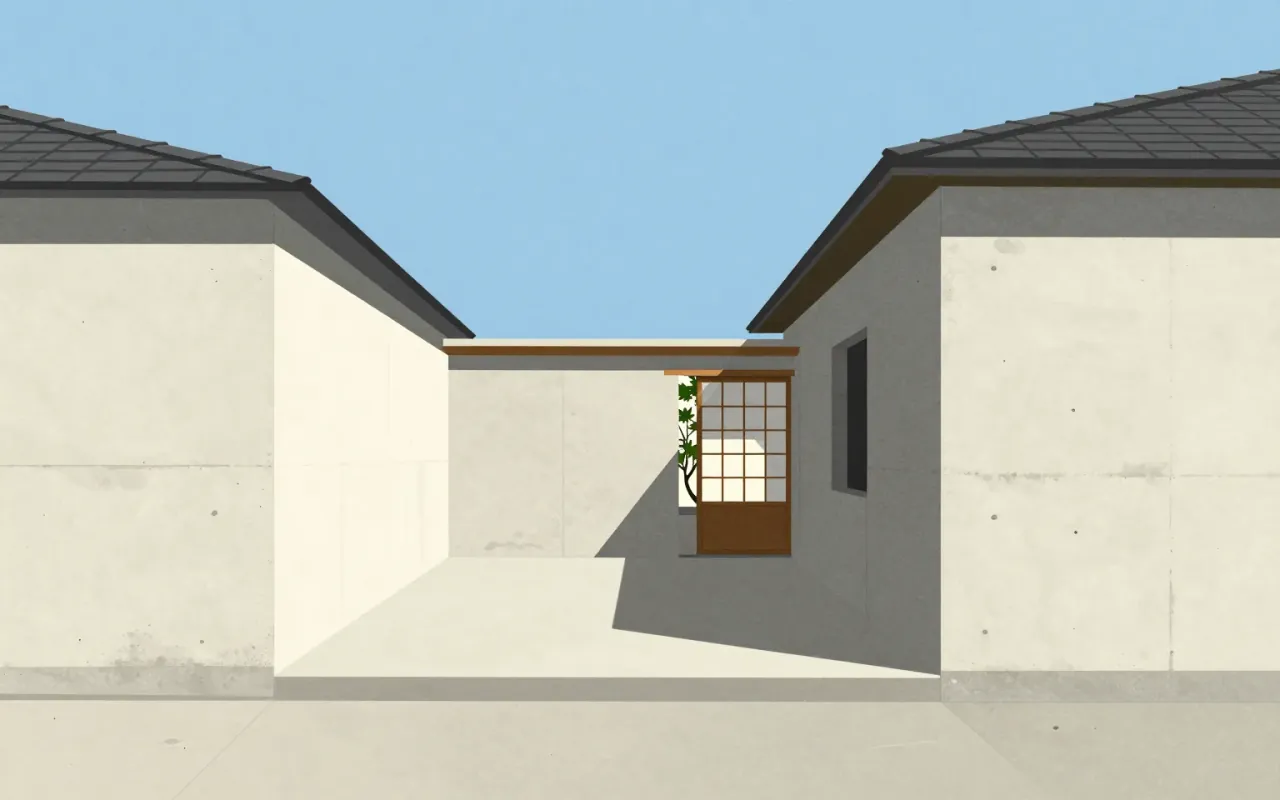
Ando used cast-in-place concrete shaped by wooden shuttering, preserving the grain of the formwork. He positioned open courtyards between enclosed volumes to structure circulation. He orchestrated light, void, and sequence to express sensation over symbolism.
What works
The interplay of solid and void creates legible spatial rhythm. The wood-textured concrete delivers tactile consistency across scales. The courtyard-as-circulation device forces engagement with weather, light, and time—without adding mechanical systems.
What does not
The work does not accommodate flexibility of use. It does not soften material expression for comfort or warmth. It does not resolve tension between austerity and domesticity—it holds it deliberately.
What it influenced
It influenced a generation of architects to treat concrete as both structure and finish, and to treat courtyards as active spatial mediators—not decorative voids.
Is it worth your time
Yes—if you need to understand how spatial discipline, material honesty, and seismic pragmatism cohere in architecture. No—if you expect narrative, ornament, or adaptability to non-Japanese contexts.