What the work is
Eero Saarinen’s Tulip tables belong to a coordinated group of pedestal furniture made by Knoll. MoMA describes a family of tables, chairs and stools sharing a single supporting leg.
How it was made
The central pedestal is the organising principle. It shifts attention from several separate legs to the relationship between a broad horizontal surface, a stem and the supporting base.
What works
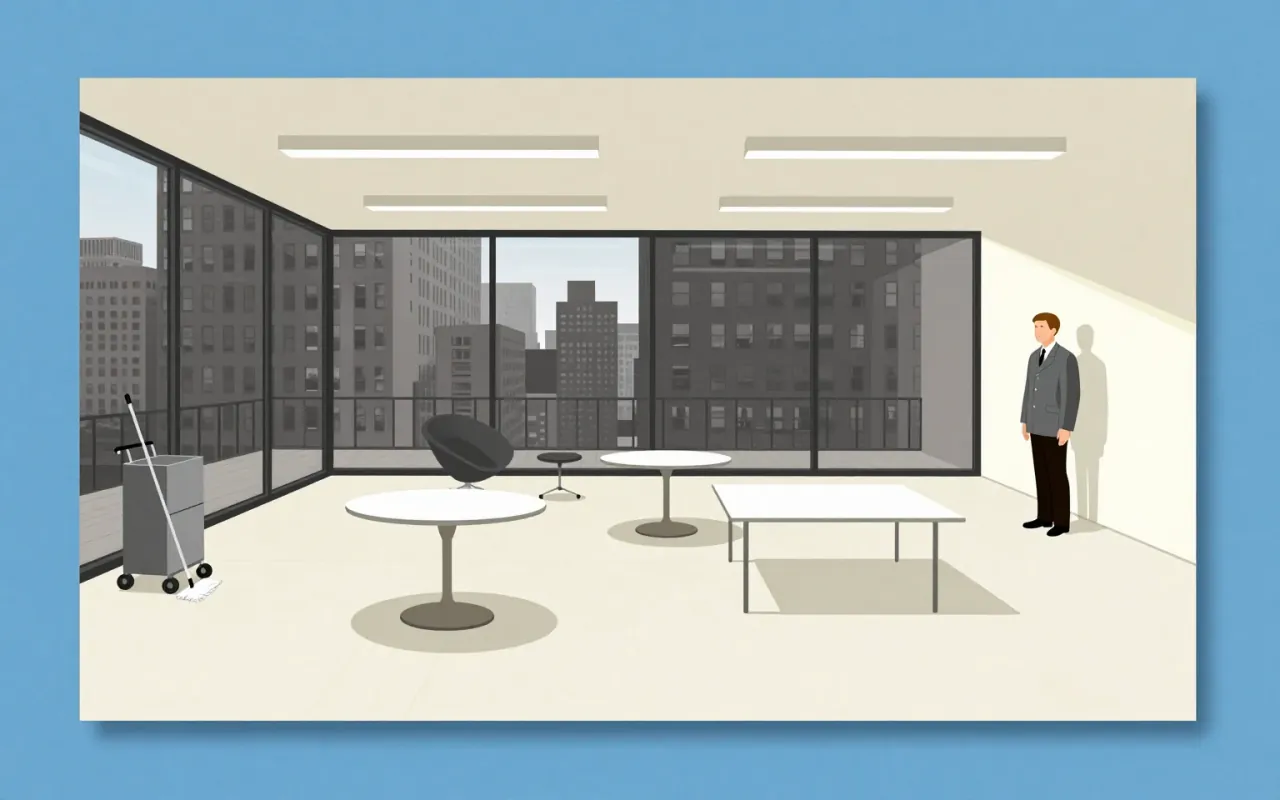
Saarinen intended the series to reduce the visual clutter beneath furniture. Read the table together with the chairs: the repeated support gives separate objects a common language across the room.
What does not
A visually unified family does not mean identical construction in every piece. The armchair’s materials should not be transferred to the table’s specification, and appearance alone cannot establish stability or usable legroom.
What it influenced
MoMA’s account establishes the series as Saarinen’s final furniture group and explains its shared design intention. It does not name later tables as direct descendants, so formal similarity should remain a comparison rather than an attribution.
Is it worth your time
Worth studying when designing families of objects. Sketch the space beneath a conventional table and then beneath a pedestal table; compare how the supports affect the room as a whole, not just the individual silhouette.