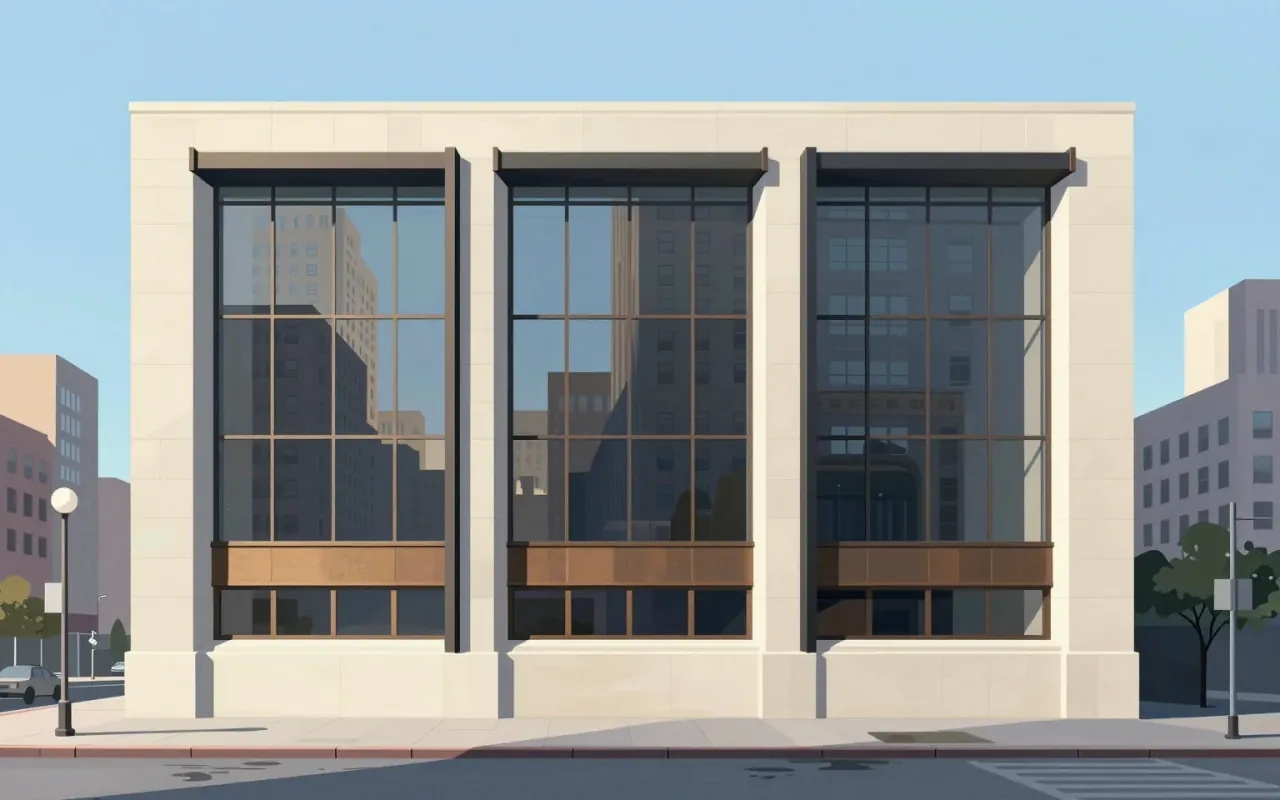
A temporary pavilion built to embody Weimar Germany’s ideals — then erased, then rebuilt as a monument to its own erasure.
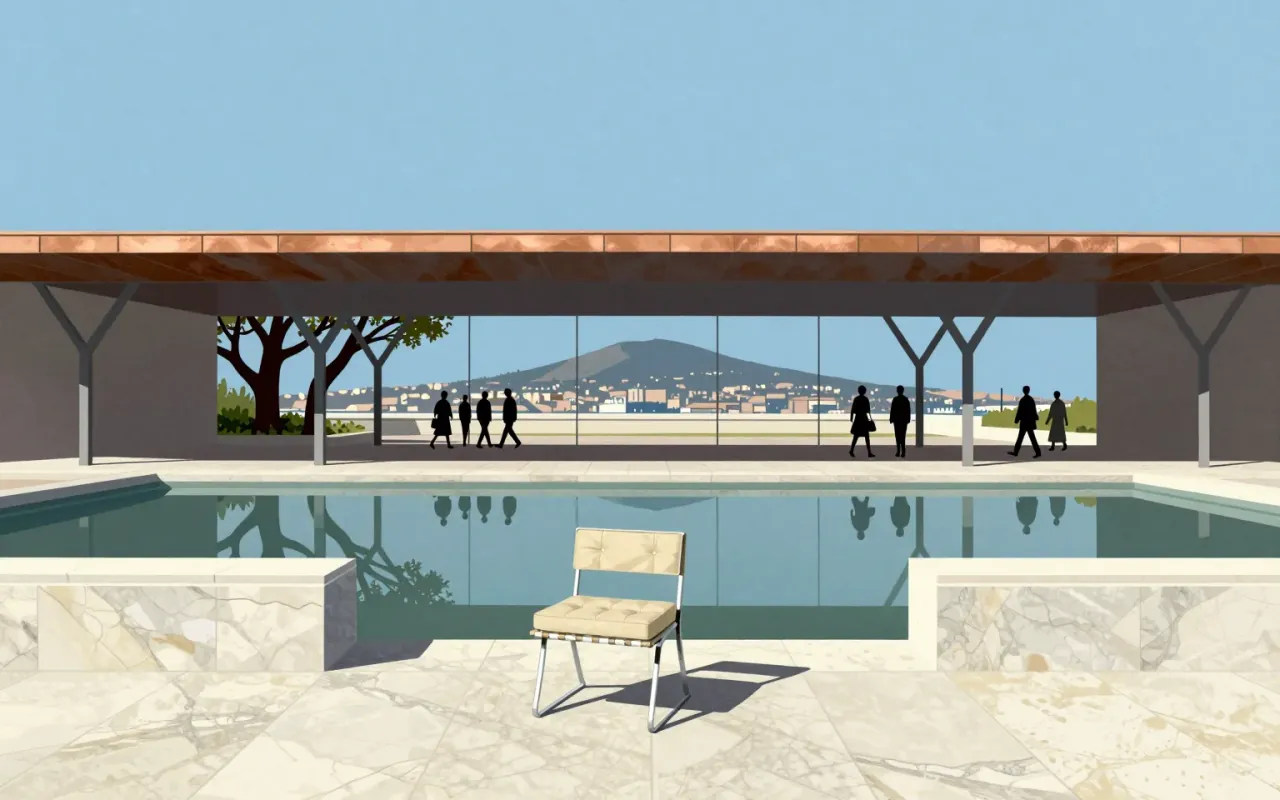
The Barcelona Pavilion is a temporary German Pavilion for the 1929 International Exposition in Barcelona, co-designed by Ludwig Mies van der Rohe and Lilly Reich. It used marble, red onyx, and travertine. It was demolished in 1930. A 1986 reconstruction now stands on the original site. It is one of Mies’s two European masterworks. Its spatial logic, material choices, and role as both exhibit and experiential space remain legible and instructive.
those seeking technical documentation of construction methods
those requiring evidence of post-1929 use or adaptation
The design analysis1 min read
What the work is
The Barcelona Pavilion is the German Pavilion for the 1929 International Exposition in Barcelona. It was a temporary structure serving as the venue for the official opening of the German section of the exhibition.
How it was made
It was co-designed by Ludwig Mies van der Rohe and Lilly Reich in 1928 as a temporary German Pavilion for the 1929 International Exposition in Barcelona. It used marble, red onyx, and travertine. It was demolished in 1930. A 1986 reconstruction now stands on the original site.
What works
Its simple form establishes clarity of intention. Its use of expensive materials asserts cultural weight without ornament. Its free plan and floating roof dissolve interior/exterior boundaries. It guides visitor movement as part of its function.
What does not
It does not survive in its original form. Its temporality was built into the commission — it was never intended to last beyond the exposition.
What it influenced
It influenced many important modernist buildings. Furnishings designed for it — including the Barcelona chair — are still in production.
Is it worth your time
Yes. It is one of Mies’s two European masterworks. Its spatial logic, material choices, and role as both exhibit and experiential space remain legible and instructive.