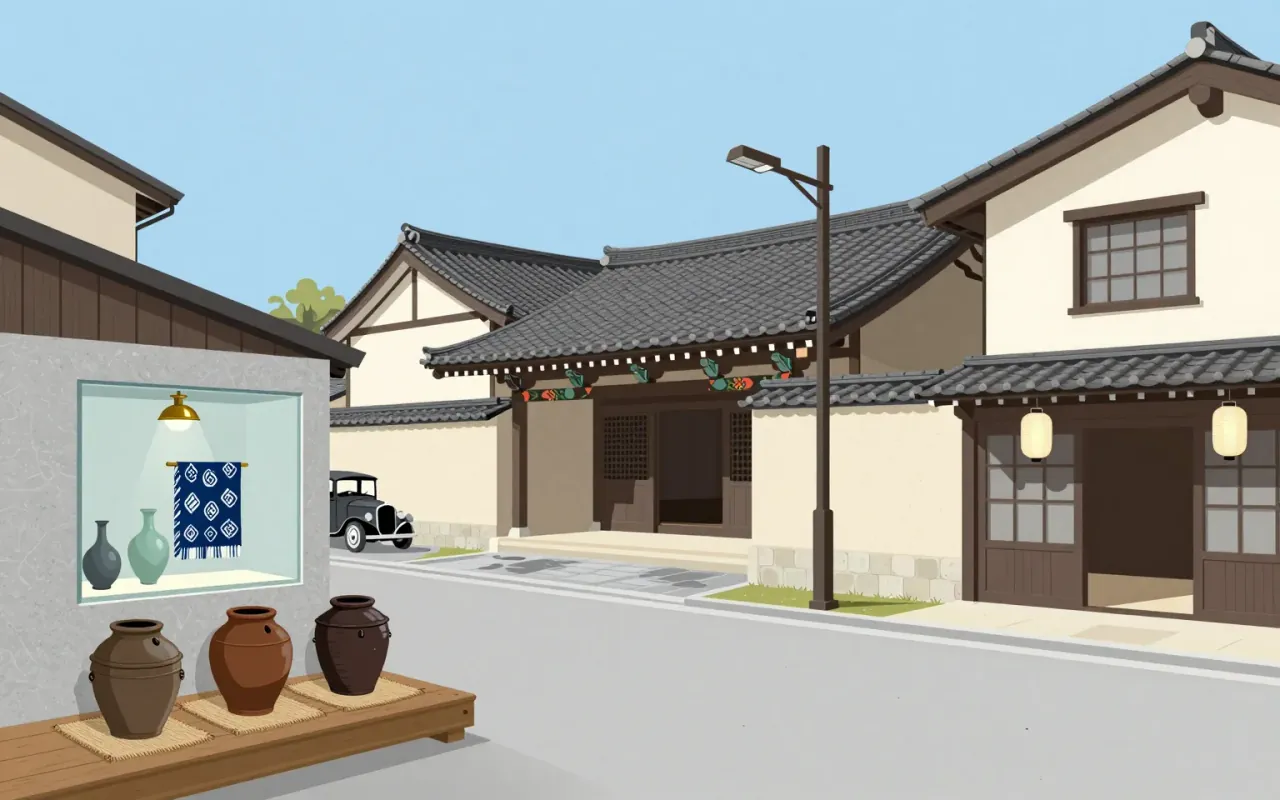
Yanagi didn’t find folk craft — he built its frame, then hung it with colonial authority.
Yanagi Sōetsu’s work is the institutionalisation of 'mingei' — not an aesthetic or technique, but a category built through research, naming, collecting, and museum founding. It works by elevating anonymity, utility, and hand-making into principles. It fails by eliding colonial power: he curated Korean craft while opposing Korean sovereignty. It influenced how folk objects are framed in museums and criticism — separating them from makers’ identities and political context. It is worth your time only if you are examining how categories are constructed, not celebrated.
A theoretical and institutional project: defining, naming, collecting, and exhibiting ‘mingei’ as hand-crafted art of ordinary people.
How it was made
Yanagi conducted field research in Korea from 1916, co-founded museums, wrote theory, and collected disappearing Edo- and Meiji-period pottery — but never made objects himself.
What works
It gave utilitarian objects philosophical weight and museum legitimacy — rescuing pots, coining terms, founding institutions, and fixing criteria for what counts as folk craft.
What does not
It does not represent Korean self-determination. Yanagi opposed the Korean independence movement while curating Korean crafts under Japanese colonial rule.
What it influenced
It established mingei as a defined category in museum practice, criticism, and collecting — shaping how ‘folk’ craft is separated from art, industry, and politics.
Is it worth your time
Yes — if you need to understand how folk craft was institutionalised as a category, not discovered as a tradition.