What the work is
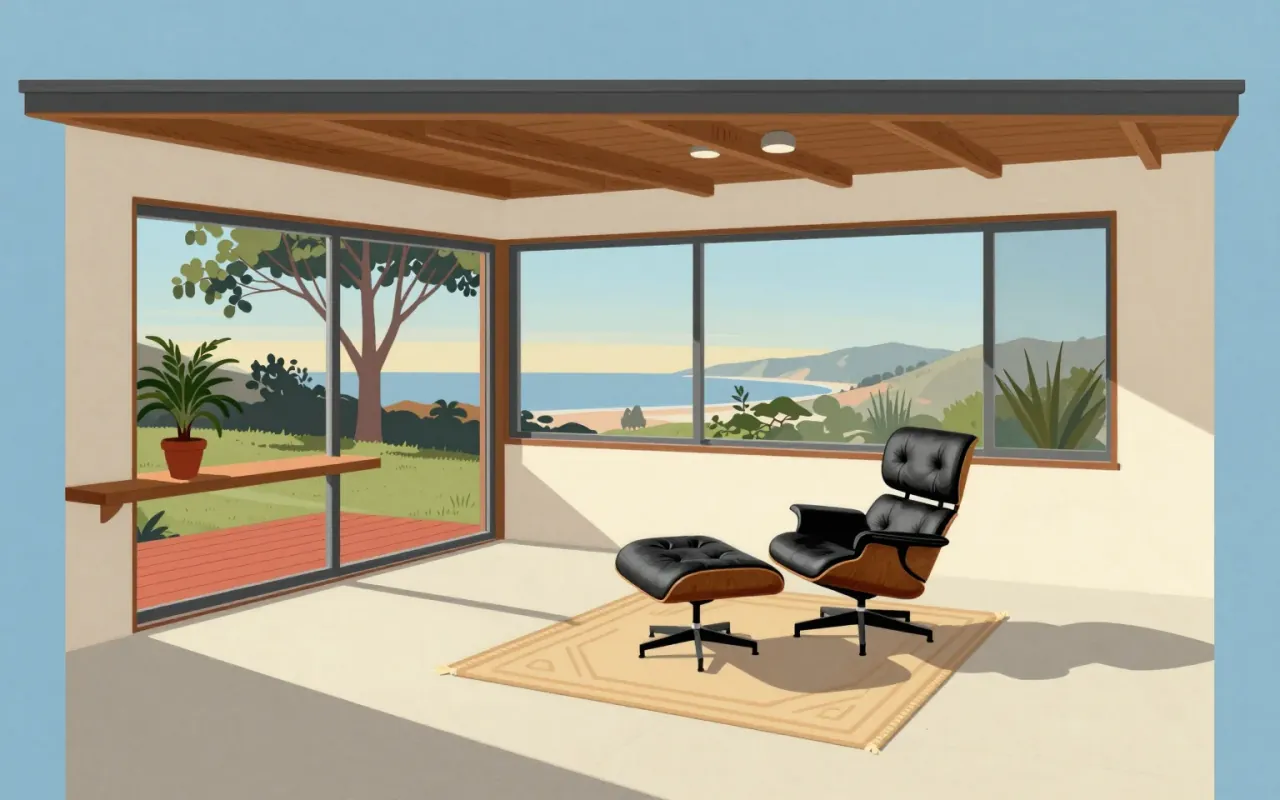
A lounge chair and ottoman introduced in 1956 by Herman Miller, designed by Charles and Ray Eames, composed of three veneered molded plywood shells and leather-upholstered cushioning.
How it was made
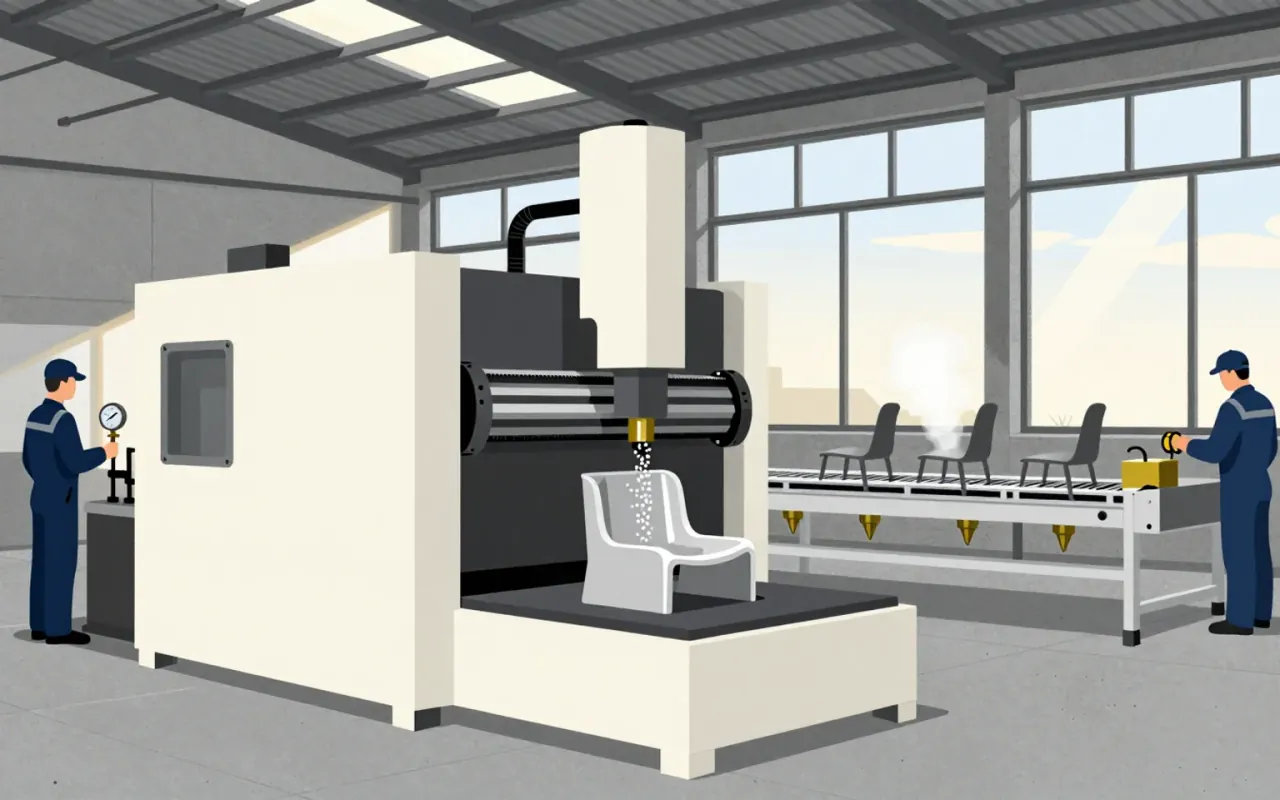
It was made using molded plywood shells—three curved shells forming the headrest, backrest, and seat—covered with veneer and paired with leather-upholstered cushioning. The technique built on Alvar Aalto’s pioneering work, advanced through the Eameses’ Navy leg splint, and developed in collaboration with Eero Saarinen for MoMA’s Organic Design competition.
What works
The three-shell structure delivers distinct support zones. The leather upholstery and molded form together achieve the ‘warm, receptive look’ Charles Eames described—evoking both the English club chair and a well-used first baseman’s mitt. Ray Eames called it ‘comfortable and un-designy’, anchoring its success in felt ease over formal novelty.
What does not
The chair was developed for the high-end market, as an exception to the Eameses’ pursuit of affordable furniture. That is the trade-off to examine: the design offers a particular expression of comfort, but it does not answer the same affordability question as their other work. This does not establish that it could not be produced at scale.
What it influenced
It established a template for luxury furniture that merges industrial technique with domestic warmth—a precedent for how craft, material memory, and cultural reference could coexist in postwar American design.
Is it worth your time
Yes. Study the relationship between its three-shell construction and its ambition to recall the comfort of an English club chair. It is also a useful case for examining how a studio’s priorities change when it designs for a high-end market.