Wolfgang Weingart — Typographic Process
A series treats typographic organization as something to test rather than merely obey.

DIN 1451 is a foundational typographic standard—not a font family, but a reproducible system. Its value lies in its constraint-driven clarity, not its aesthetic novelty.
Futura is a geometric sans-serif typeface designed by Paul Renner and released in 1927.
Georgia is a 1993 serif typeface designed by Matthew Carter for Microsoft, manually hinted by Thomas Rickner, specifically optimised for legibility on low-resolution screens through features including a large x-height, thicker thin strokes, reduced contrast, thickened serifs, and an unusually bold weight — all shaped by the binary bitmap constraints of mid-1990s screen rendering. Its design draws on 19th-century Scotch Roman models and shares lineage with Carter’s concurrent print typeface Miller.
Gotham is a geometric sans-serif typeface family designed in 2000 by Tobias Frere-Jones with Jesse Ragan and released in 2002. It was commissioned by GQ magazine to display a sans-serif with a 'geometric structure' that would look 'masculine, new, and fresh'. Its letterforms were inspired by examples of architectural signs of the mid-twentieth century, especially the sign on the Eighth Avenue façade of the Port Authority Bus Terminal. Frere-Jones based the font on lettering seen in older Manhattan buildings, and characterised the simplification as 'not the kind of letter a type designer would make. It's the kind of letter an engineer would make.' The letterforms Gotham was based on were geometric yet did not look like Futura; their widths were more uniform and less classical, bowls were larger. Reviews of Gotham focus on its identity as something both American and specific to New York City.
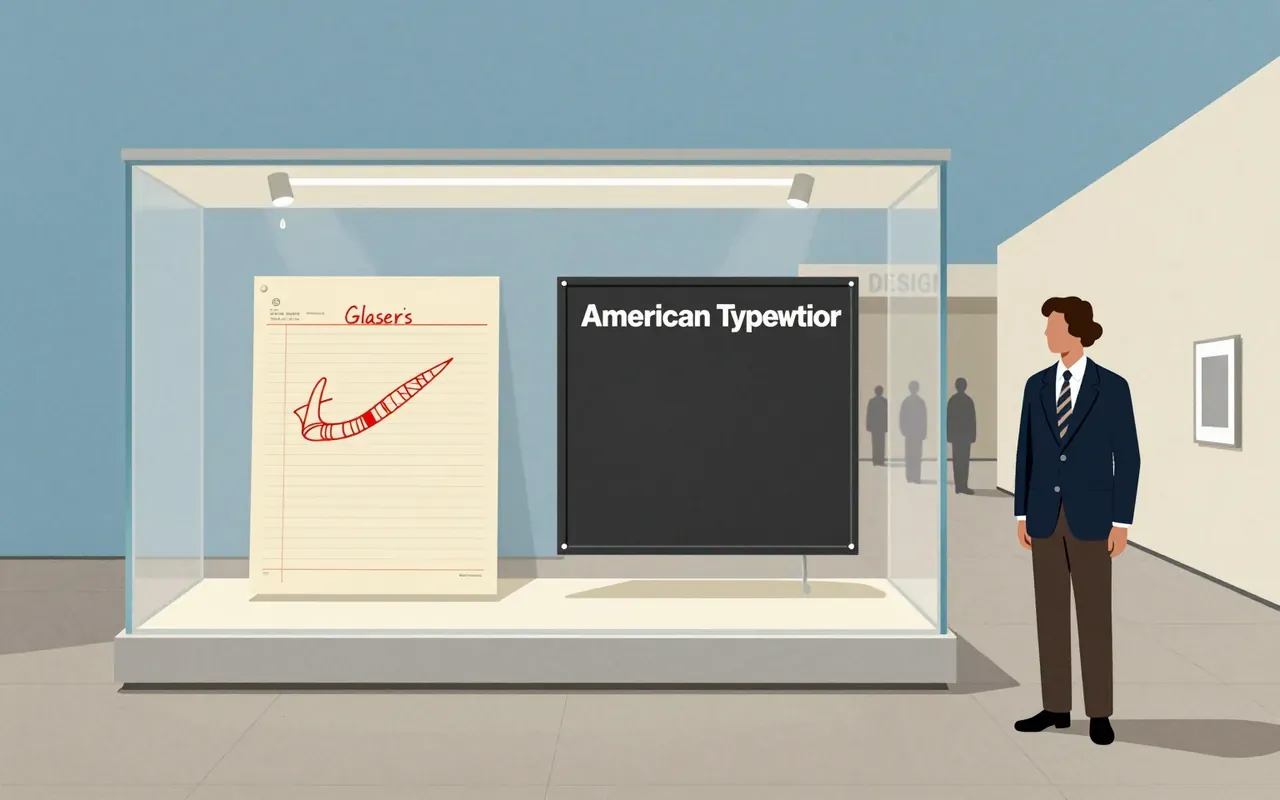
A graphic design brief must account for what is materially present—not reputation, not legacy, not what it ‘feels like’. This logo is three glyphs, one typeface, one colour, made in a taxi, given away, preserved in a museum, and later reactivated by trauma. Its power lies in what it omits: no skyline, no people, no narrative, no explanation.
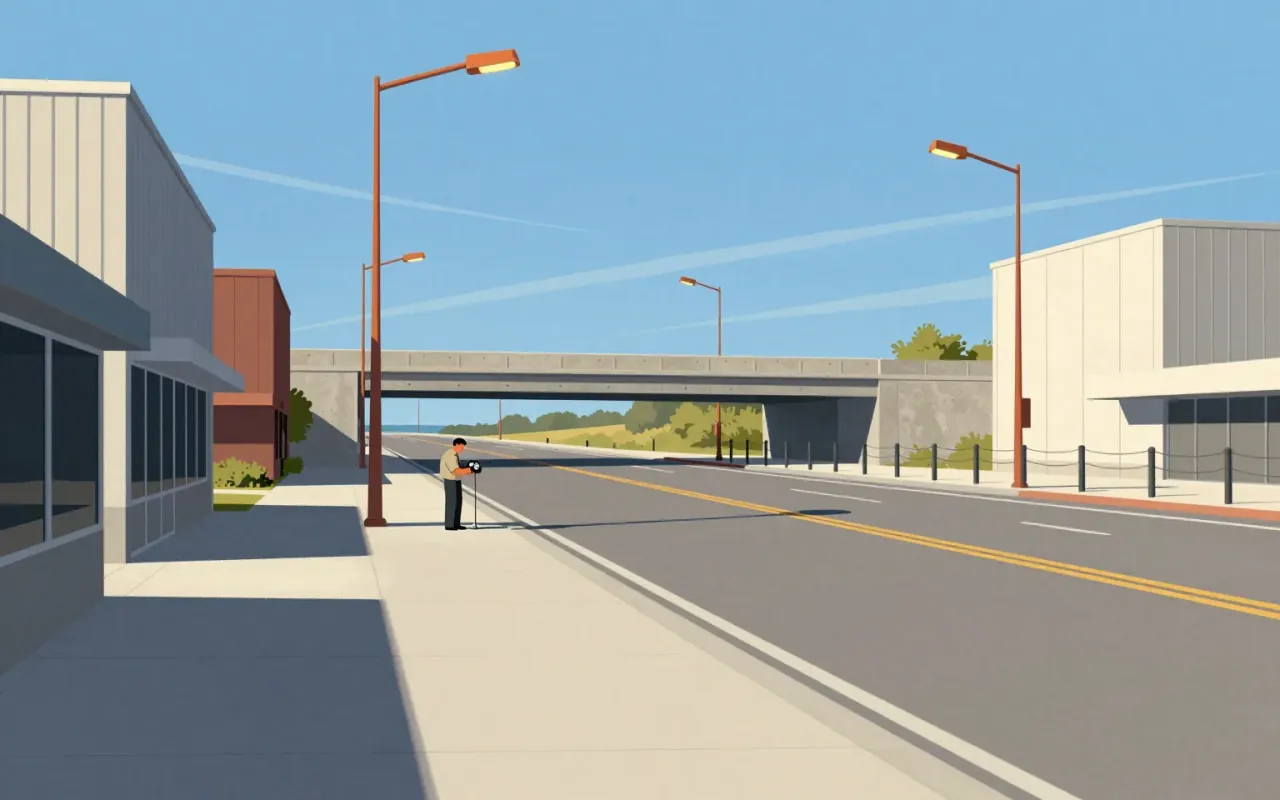
Interstate is a functional, legibility-first typeface built for versatility — not nostalgia. Its strength lies in disciplined departure from its source: the 1949 FHWA alphabets. It trades strict fidelity for readability in new contexts — but pays for that with constraints in text density. It is a defining typeface of its era not because it is novel, but because it answers a clear constraint: how to make road signage work on a magazine cover, a website headline, and a network logo — all without breaking.
Lato is a humanist sans-serif typeface designed by Łukasz Dziedzic and released in 2010. It was commissioned by a Polish bank, then cancelled and published under the Open Font License. As of August 2018, it appeared on over 9.6 million websites and ranked third on Google Fonts by usage. It has been applied in physical media including election billboards and information signs, and adopted by Save the Children for its logotype since 2022.
Tahoma is a humanist sans-serif typeface designed by Matthew Carter for Microsoft as the Windows interface typeface. It shipped with Office 97 and served as the default screen font in multiple Windows versions. Carter first designed it as a bitmap font, then wrapped TrueType outlines around those bitmaps. Its bold weight is based on double-pixel width. Ascender Corporation added italic and small caps versions in 2010. Tahoma has a narrower body, smaller counters, tighter letter spacing, and a more complete Unicode set than Verdana. The uppercase I is distinguishable from lowercase l — critical for technical clarity. Carter acknowledged similarities between Tahoma and his earlier Bell Centennial typeface. It was created to address specific technical challenges posed by early computers.
Trebuchet MS is a functional, context-bound typeface — defined by its distribution, its contrast with Verdana, and its role in Windows XP. Its influence lies in reach, not revision.
A foundational sans-serif typeface family released in 1898 for commercial print jobs, derived from a shadowed predecessor by removing the drop shadow and filing two design patents. Its monoline structure and single-storey 'g' prioritised mechanical reproducibility over typographic nuance. It prefigured neo-grotesques like Helvetica by fifty years—not as a stylistic ancestor, but as an operational prototype for scalable, patent-protected industrial typography.
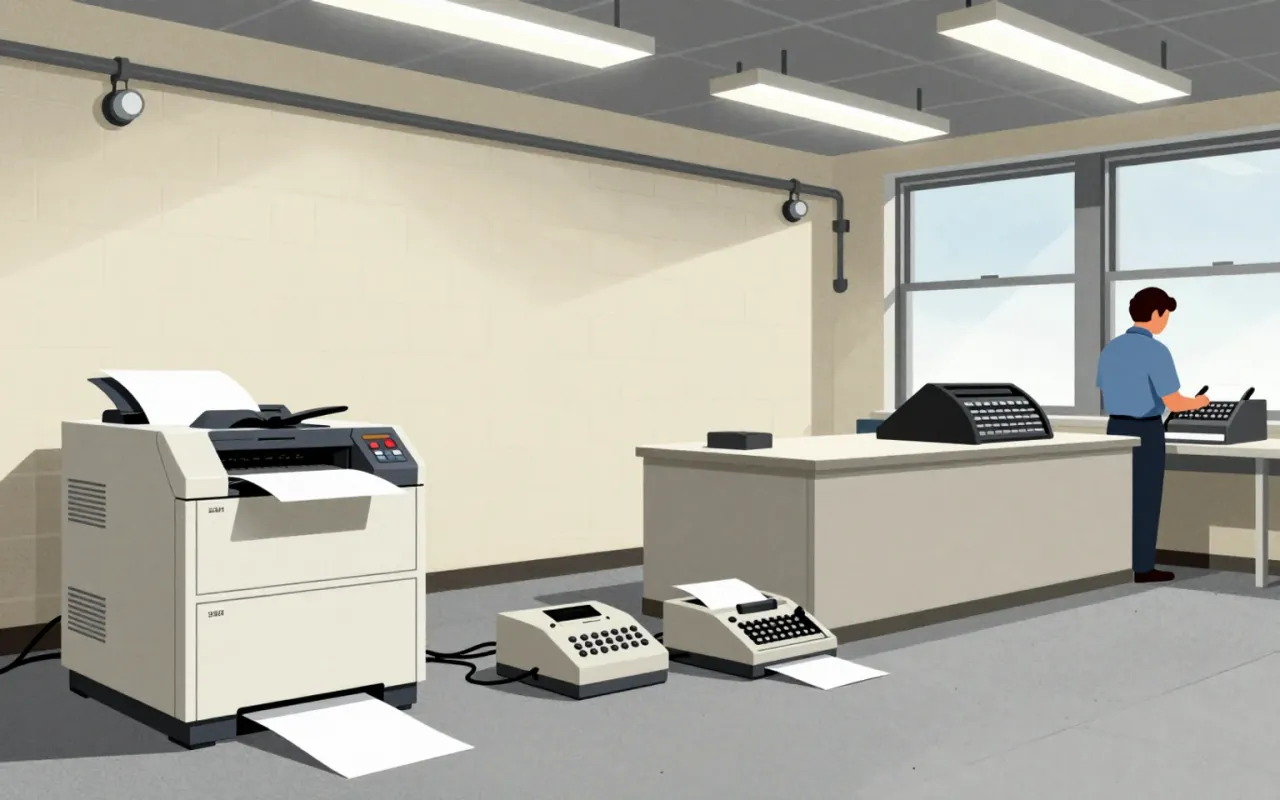
Arial is a neo-grotesque sans-serif typeface designed in 1982 by Robin Nicholas and Patricia Saunders at Monotype Typography as a metrically compatible alternative to Helvetica for the IBM 3800–3 laser printer.

Baskerville is a 1757 serif typeface designed by John Baskerville in Birmingham and cut by John Handy. It is transitional — a refinement of Caslon’s old-style forms — with higher stroke contrast, sharper serifs, vertical axis shift, more circular curves, and greater character regularity. Its success depended on wove paper (co-developed with James Whatman), custom ink, and precise presswork. The 1757 Virgil edition demonstrated its capabilities and secured Baskerville’s 1758 appointment as University Printer to Cambridge. It set formal precedents for Bodoni and Didot, but its legibility limits at small sizes and material dependencies remain unaddressed.
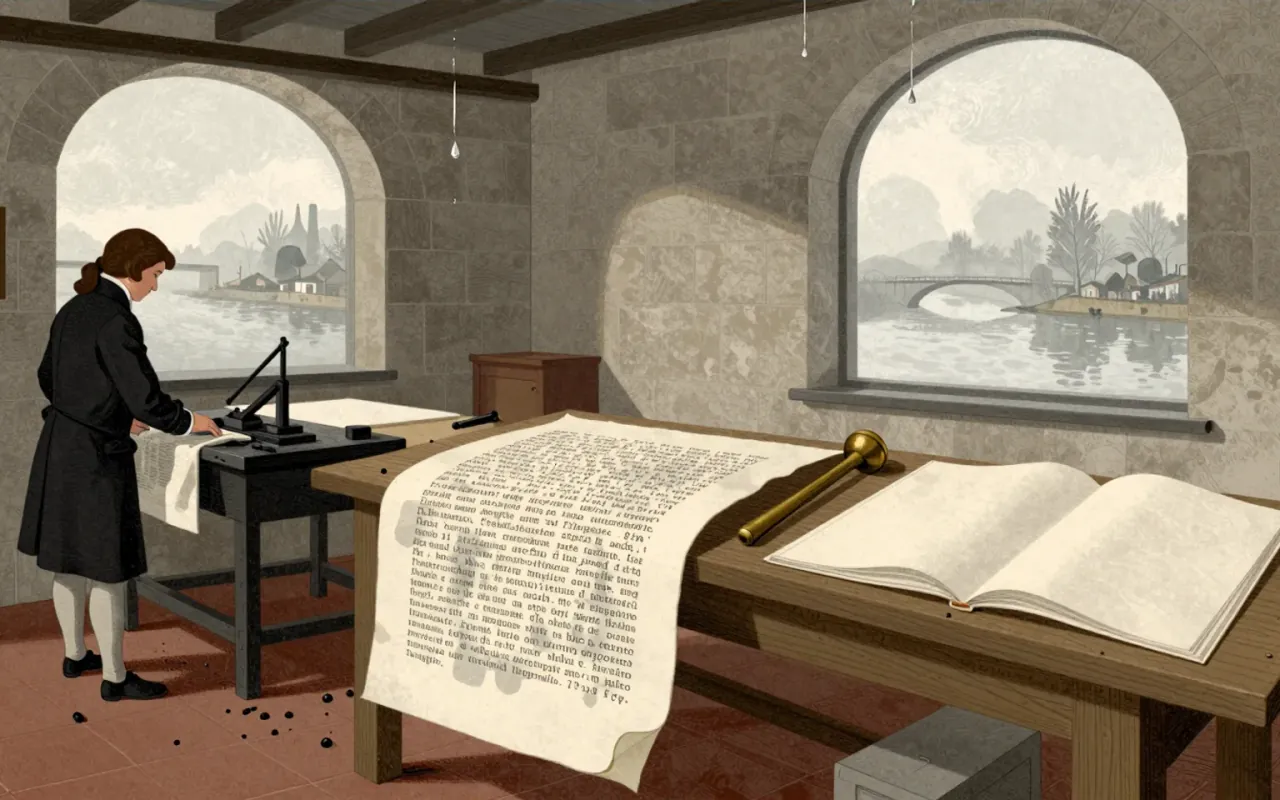
Bodoni is a late-eighteenth-century type system defined by extreme stroke contrast, flat unbracketed serifs, geometric construction, and rational structure. It was made possible by Bodoni’s technical mastery in cutting fine hairlines across many sizes—and by his aesthetic commitment to plainness and material purity. It works where size, paper, and ink support its optical demands: the 1808 Iliad and 1806 Oratio Dominica prove its fidelity and ambition. It fails where those conditions collapse: at small sizes, hairlines vanish and alternating strokes cause dazzle. It influenced all subsequent Didone typography—not as a timeless ideal, but as a precise, constrained, and unforgiving system. It is worth your time if you treat legibility as a condition, not a guarantee.
Caslon is the first English type system engineered for optical legibility in print, not screen.
Comic Sans is a 1994 Microsoft typeface designed by Vincent Connare to replace Times New Roman in Microsoft Bob’s cartoon interface. It was drawn manually with a mouse, inspired by The Dark Knight Returns and Watchmen, and intended to be informal and child-friendly. Though it missed Bob, it shipped with Windows 95 and gained broad use in education and dyslexia support. A 2010 Princeton study found Comic Sans Italic improved information retention versus Helvetica. It demonstrates how narrow constraints — aesthetic, technical, and audience-specific — can yield unexpectedly robust functional outcomes.
Cooper Black is an ultrabold serif typeface designed for display use, drawn as an extra-bold weight of the Cooper Old Style family. It originated from Oswald Cooper’s lettering practice in 1920s Chicago and the Midwest. Its low stroke contrast and soft, 'muddy' appearance distinguish it from nineteenth-century fat faces. It quickly became popular in newspaper advertising and later in pop culture — notably on the 1966 Pet Sounds album cover. It was the second-best-selling typeface for American Type Founders and polarised typographic opinion: rejected by conservative typographers but embraced so enthusiastically by graphic designers that supply could not meet demand.
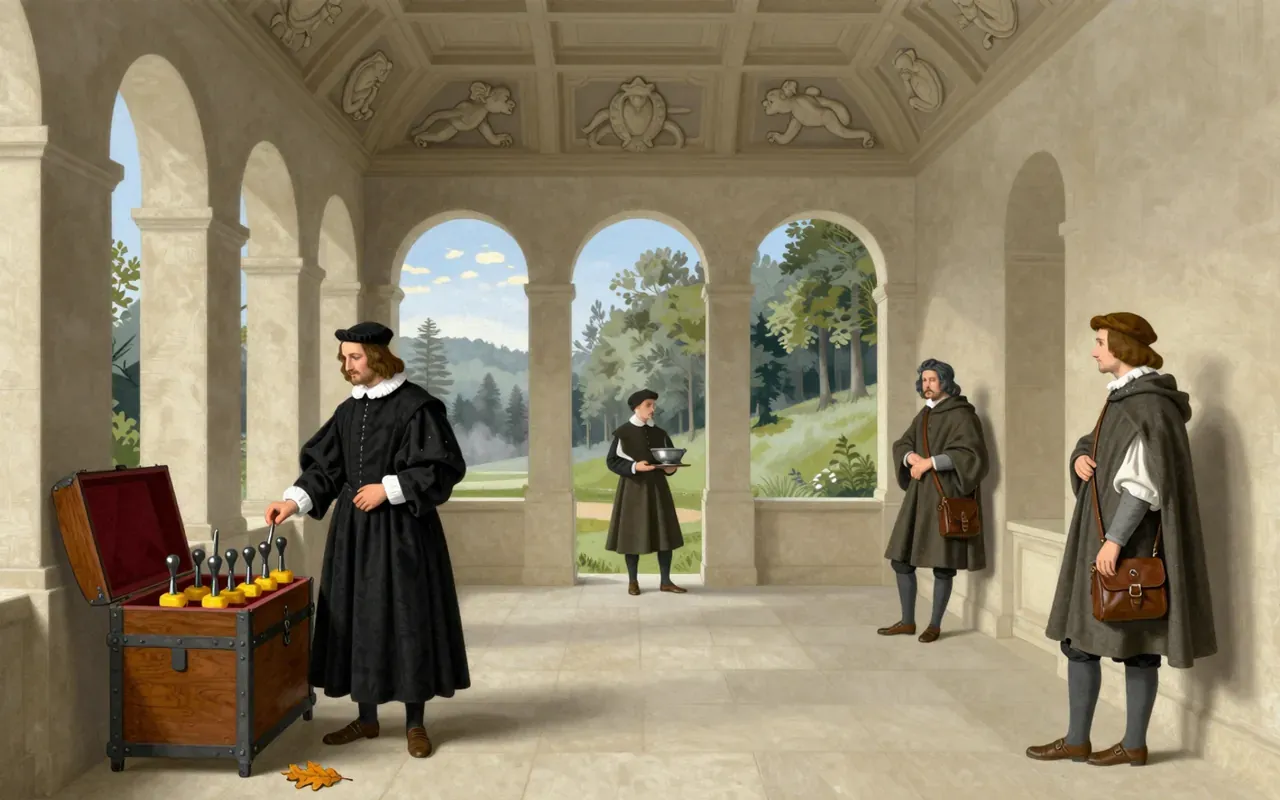
Garamond is a group of 34 metal typefaces cut by Claude Garamond (Garamont) in sixteenth-century Paris. They follow Griffo’s 1495 design, belong to the old-style serif category, and were made by hand-engraved punches used to stamp matrices for casting type. The Grecs du roi Greek typeface replicates Angelo Vergecio’s handwriting using an unusually large number of alternates and ligatures. Swash forms exist only in the parangonne. Small capitals appear in all preserved types except the gros-canon. Garamond’s independence as a punchcutter helped define typefounding as a distinct commercial industry.
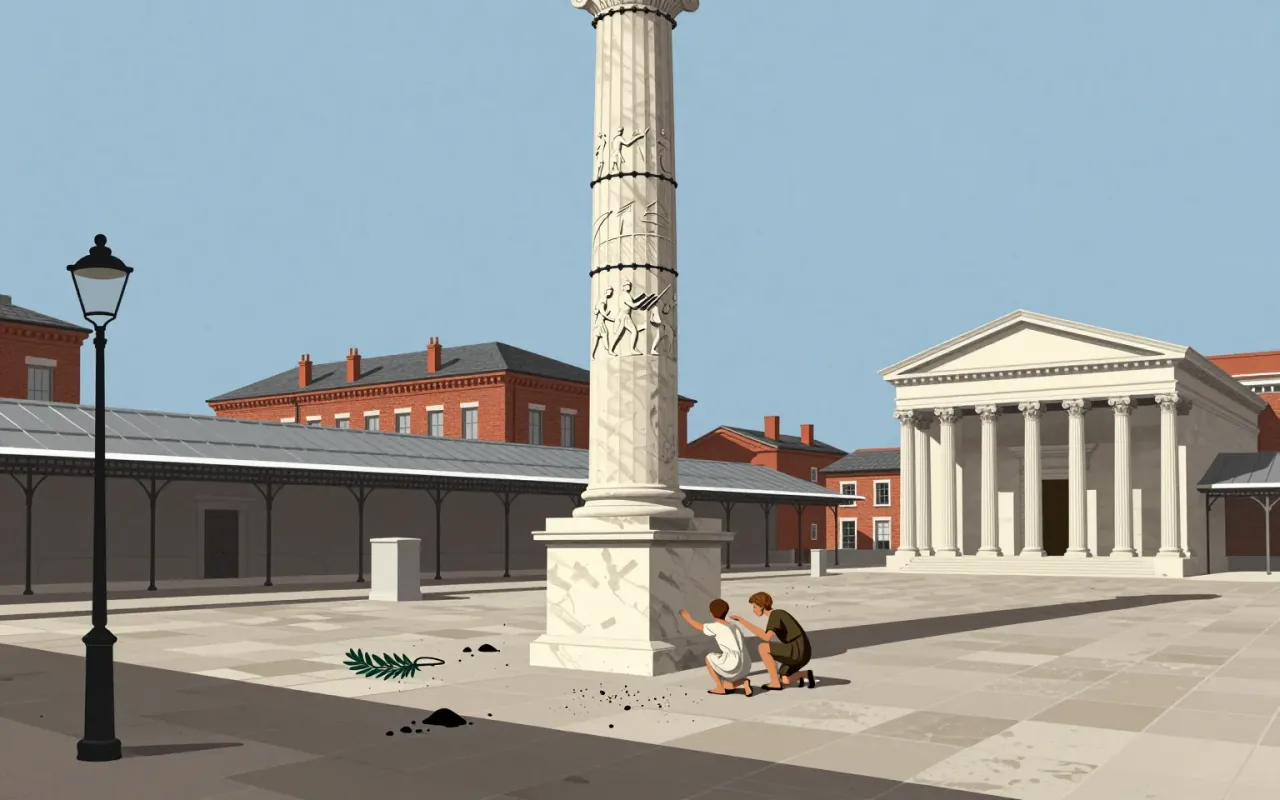
Gill Sans is a humanist sans-serif typeface designed by Eric Gill and released by Monotype in 1928, based on Edward Johnston's 1916 Underground Alphabet and Roman inscriptions, with lowercase forms derived from old-style serifs and uppercase proportions drawn from Trajan’s Column.

Helvetica is a deliberately constrained sans-serif, made to erase voice — not to express it.
IBM Plex is a corporate typeface designed to replace Helvetica across IBM’s global communications. Its rationale is financial and ideological: open-source licensing eliminates licence fees; typographic decisions reject expressive or historical categories in favour of functional clarity. It delivers a coherent, documented system — but only within the narrow frame of IBM’s internal brand requirements.
Open Sans is a functional, open-source humanist sans-serif designed by Steve Matteson for Google in 2011. It prioritises screen legibility through wide apertures and large x-height, supports Latin, Greek, Cyrillic (897 glyphs), gained Hebrew and variable font support in 2021, and manifests publicly via a Google Easter egg. It does not extend beyond those scripts. Its influence lies in normalising open-source, cross-platform typography — not aesthetic innovation.
Optima is a deliberate hybrid: a sans-serif built from serif sources, calibrated by mathematical proportion, and tested in real textual labour. It does not invent new categories — it occupies the gap between them with precision.
Roboto is a functional, open, and pervasive sans-serif typeface family designed by Christian Robertson for Google in 2011. It succeeded by solving a narrow problem well — legibility on early Android screens — then scaled through permissive licensing and platform integration.

Times New Roman is a functional, collaborative, constraint-led typographic revision — not an origin story. Its power lies in what it omitted: flourish, novelty, and authorial ego. It succeeded by being invisible on the page and unavoidable in use.
Univers is a foundational typographic system — not a single face but a rigorously unified family. Its design decisions were driven by technical constraints (phototype + metal), conceptual ambition (a complete, logical family), and aesthetic rejection (of Futura’s geometry). It succeeded where others had only gestured: by delivering consistency, scalability, and clarity — all before a single character was cast or exposed.